If you've played tennis for years and someone keeps telling you to try padel, you've probably assumed it's basically the same sport on a smaller court. That assumption will get you humiliated in your first match.
Padel is not tennis on a smaller court. It borrows from tennis in the way that chess borrows from checkers: similar pieces, completely different game. The skills that make you a solid tennis player will get you to a mediocre padel level very quickly. Getting past that plateau requires understanding what actually changes.
This is a breakdown of the real differences between padel and tennis, written for tennis players who want to understand the sport before they step on a court in Cyprus and start looking confused.
The Courts Are Not Just Smaller
Tennis: 23.77m x 10.97m. Padel: 20m x 10m. On paper that's a minor size difference. In practice it's a completely different movement game.
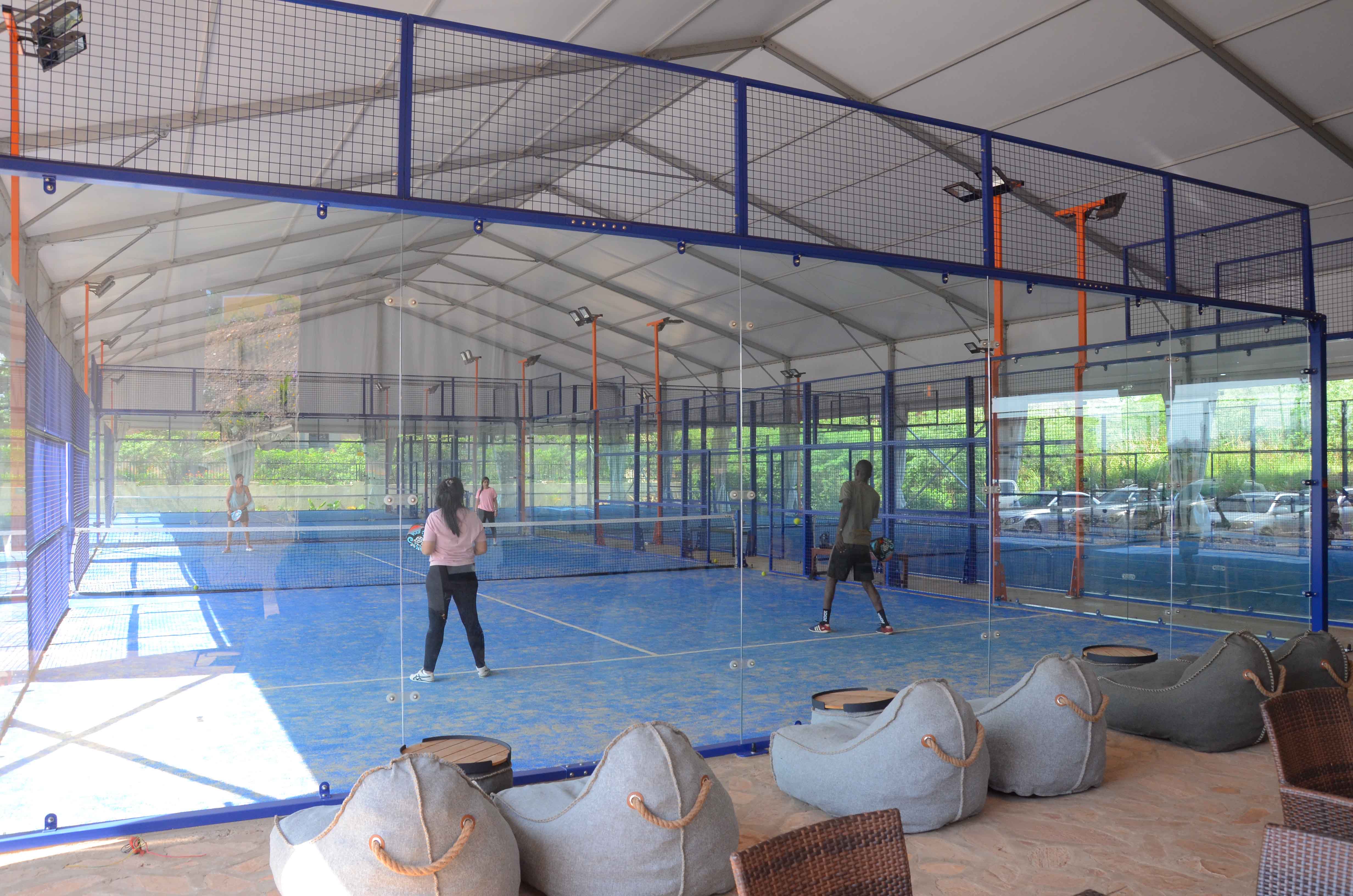
Padel courts are enclosed with glass walls and metal mesh. The ball can stay in play after hitting any wall. A ball that bounces off the back glass is not out: it's still a live ball and you have to play it. In tennis, the boundary is definitive. In padel, the walls are another player.
This changes positioning fundamentally. In tennis you cover the court side to side. In padel you cover depth: the glass behind you is as much "court" as the front zone. Players who understand this win rallies by forcing opponents into the back corners. Players who don't get caught flat-footed every time a ball hits the glass.
Scoring: Identical on Paper, Different in Practice
The scoring system in padel is directly borrowed from tennis: 15, 30, 40, game, set (first to 6 with a 2-game lead, tiebreak at 6-6), best of 3 sets. If you know how to keep score in tennis, you know how to keep score in padel.
The difference is that padel is almost always played as doubles. Singles padel exists but it's rare: two walls are blocked off and the game loses most of what makes it interesting. Padel is fundamentally a team sport, which means positioning, communication, and coordination with your partner matters as much as individual shot-making.
If you're used to tennis singles, this is a significant mental shift. You can't cover the whole court. You have to trust your partner to cover their half, and you have to be in the right position to support them. Some tennis players find this liberating. Others find it deeply frustrating for the first few months.
Equipment: What Carries Over, What Doesn't
Rackets: Tennis rackets are strung with strings and have flex. Padel rackets are solid: compressed foam core with a perforated surface. There are no strings. The sweet spot is smaller and less forgiving than a tennis racket, and the padel racket is shorter (45-47cm vs 68cm for tennis).
Tennis players often underestimate how much they rely on string tension to generate pace and spin. Without strings, generating pace in padel requires more arm speed and wrist snap. The first few sessions with a padel racket usually involve hitting everything shorter than intended.
Balls: Padel balls look like tennis balls but are slightly depressurized: they bounce lower. This is intentional; a full-pressure tennis ball would bounce off the glass walls unpredictably.
Shoes: Court shoes work, but padel-specific or all-court shoes with good lateral support are better. The movement patterns in padel involve more sideways shuffling and less forward sprinting than tennis.
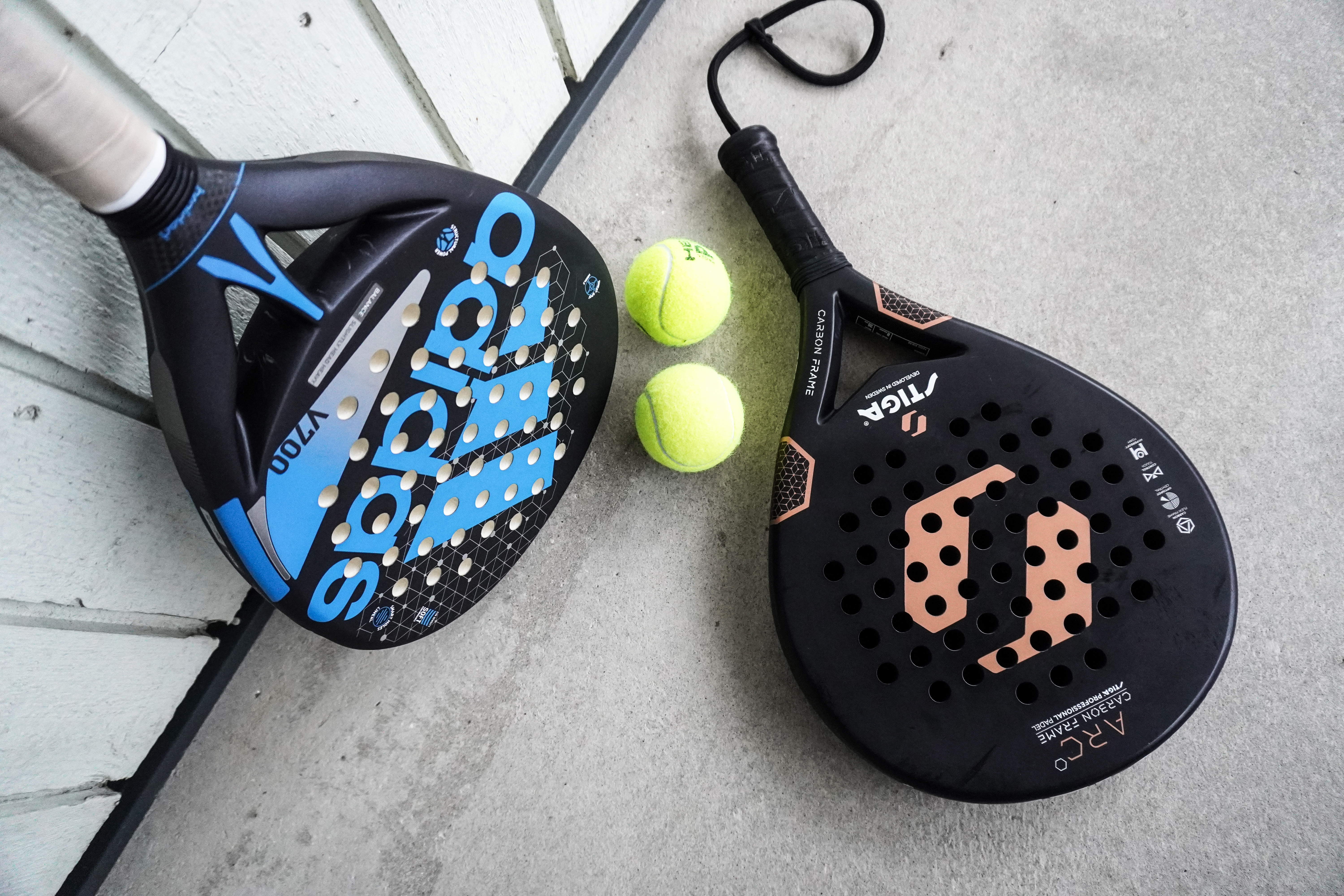
Photo by Anton Gustafsson, Wikimedia Commons, CC BY 2.0
Technique: What Transfers, What Doesn't
What transfers well:
Your forehand and backhand groundstroke mechanics carry over directly. The continental grip that tennis players use for volleys and serves is also ideal for many padel shots. Your sense of spin (topspin, slice, flat) is directly applicable. You'll understand spin effects faster than someone coming from a non-racket background.
What transfers poorly:
The serve in padel is underarm only. No overhand serving. The ball must bounce in front of you, hit the ground, and be struck below hip height. If your tennis serve is a weapon, forget it entirely: in padel, the serve is just a way to start the point, not a way to win it. Some tennis players find this frustrating. It's actually part of what makes padel accessible, since elite serving doesn't eliminate the rally before it starts.
The overhead smash in padel is called a bandeja or a vibora, and the mechanics are genuinely different from a tennis overhead. In tennis you drive through the ball with a flat face. In padel, you slice and spin because a flat overhead often goes out off the back glass. Tennis overheads have power as the goal. Padel overheads have placement as the goal.
The glass game (entirely new):
There is nothing in tennis that prepares you for reading glass rebounds. The ball comes off the back wall at a different angle, different height, and different pace than you expect from your tennis instincts. Reading the glass is a skill you build from zero, and it takes time. The best way to build it is glass drill repetition: you can't think your way through it.
Physical Demands: Different, Not Easier
Padel is often described as "less physically demanding than tennis." This is misleading. Padel demands less aerobic capacity from each individual player because you're covering half a smaller court. It demands more agility and quick direction changes because rallies often happen in tighter spaces and at closer range.
Tennis players used to baseline rallies will find padel physically different in the first month: less running per shot, more sudden lateral movements and crouching for low balls. Players who rely on their athletic advantage in tennis often find padel more equalizing than expected.
Why Padel Is Growing Faster Than Tennis
Padel has been the fastest-growing sport in the world for several consecutive years. In Cyprus it's moving quickly: the island's first dedicated padel courts appeared only a few years ago and the sport now has a dedicated community with regular tournaments and social leagues.
The growth isn't a fad. Padel solves several problems that tennis struggles with:
Accessibility: You can have a competitive padel match after 5-10 hours of practice. Tennis takes significantly longer to develop enough technique for a real rally-based game. Padel's walls keep the ball in play naturally, making it far less frustrating for beginners.
Social: Doubles only means you're always playing with someone. Tennis has always had the "finding a partner" problem. Padel requires four, which is more social but also means games happen around schedules, WhatsApp groups, and regular social networks.
Space: A padel court (200 square meters) fits roughly where one tennis court goes. In a market like Cyprus, where land isn't cheap, padel facilities can serve twice the players per square meter of a tennis venue.
Shorter matches: A padel match at club level runs 60-90 minutes. Tennis matches at the same competitive level can run significantly longer. This makes padel easier to fit into weekday evenings.
None of this means tennis is inferior: tennis is a deeper sport with greater individual expression. But padel is genuinely more accessible and more immediately social, which explains the growth curve.
Making the Transition: What Actually Happens
Based on the experience of tennis players who've taken up padel in Cyprus, here's the realistic progression:
Constant surprises from the glass. Serves feel wrong. Overheads go out. Everything short. But you understand scoring and court geometry faster than non-racket players.
You start reading the glass on the forehand side. Net game improves quickly (tennis volley instincts help). You realize your partner positioning is a mess and start paying attention to it.
Your bandeja starts becoming a real shot. You develop one reliable serve. You start to understand when to stay at net and when to retreat. The glass on your backhand side is still inconsistent.
You can play a real competitive game. Tennis players typically reach this point faster than people coming from no racket sport, but slower than people who've played padel elsewhere.
The courts in Cyprus, scattered across Limassol, Nicosia, Larnaca, and Paphos, mean you can find regular games without travelling far once you're part of the local community.
For courts and venues across Cyprus, see our full padel courts guide. For technique and drill work in Limassol, padel-limassol.com has a detailed drills guide.